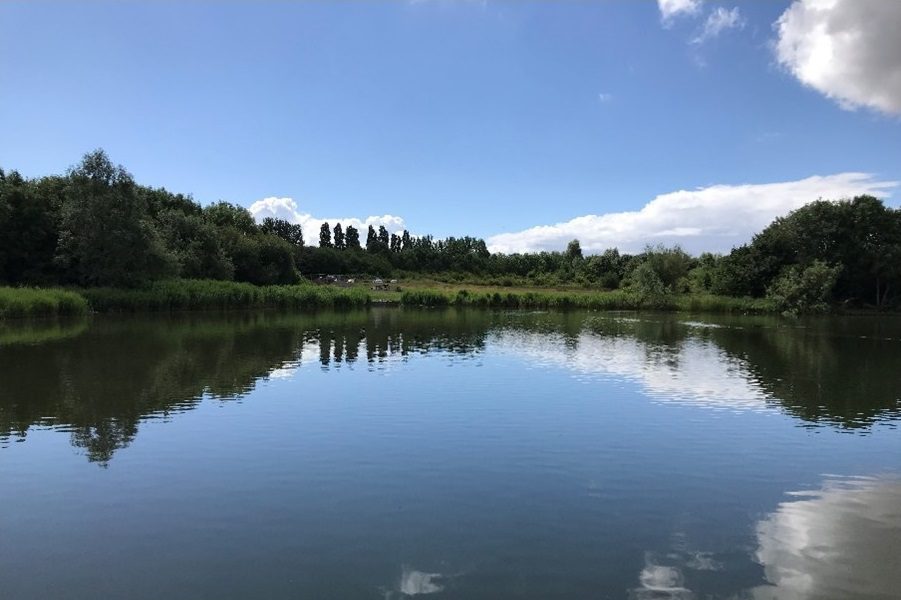
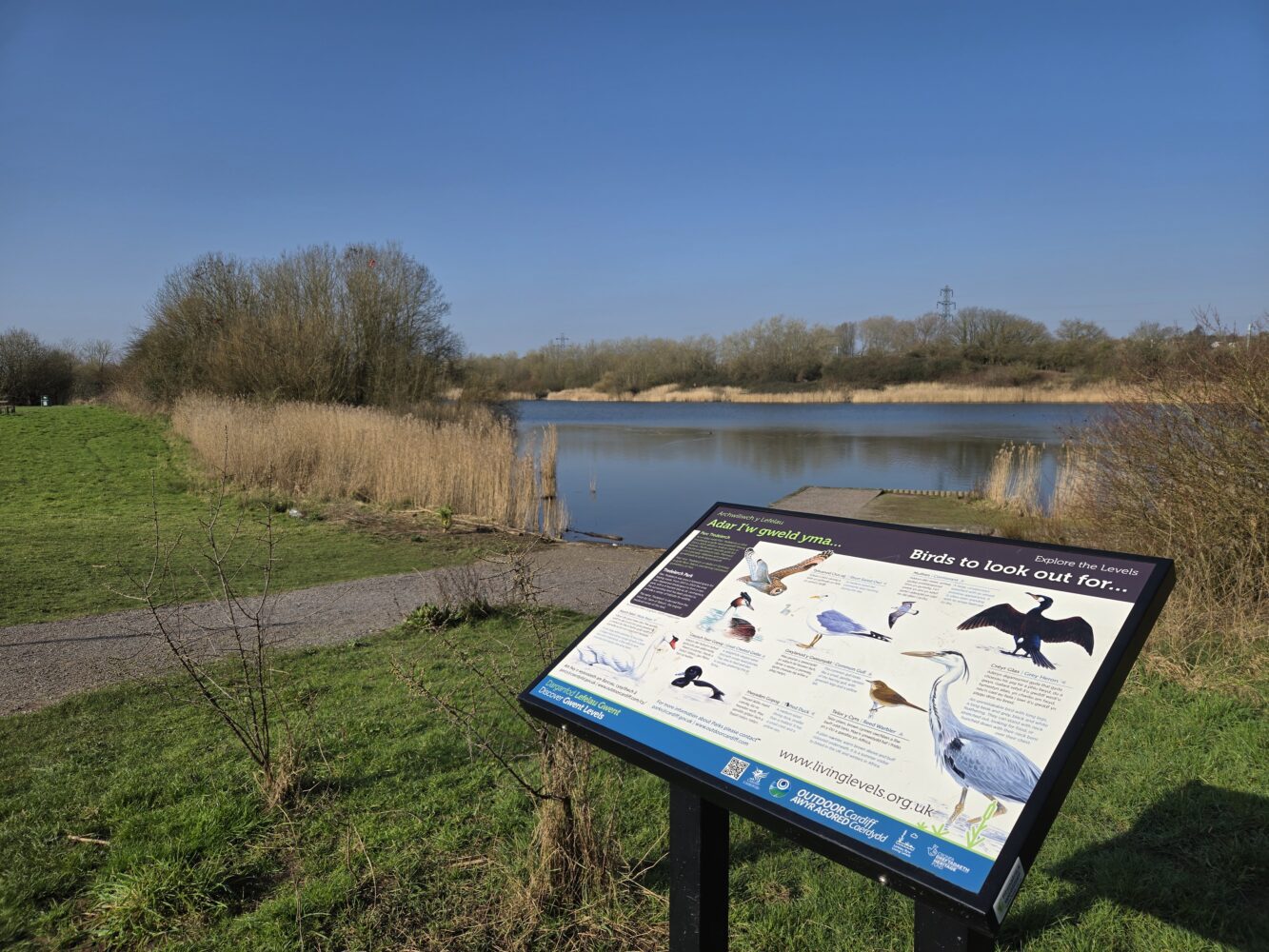
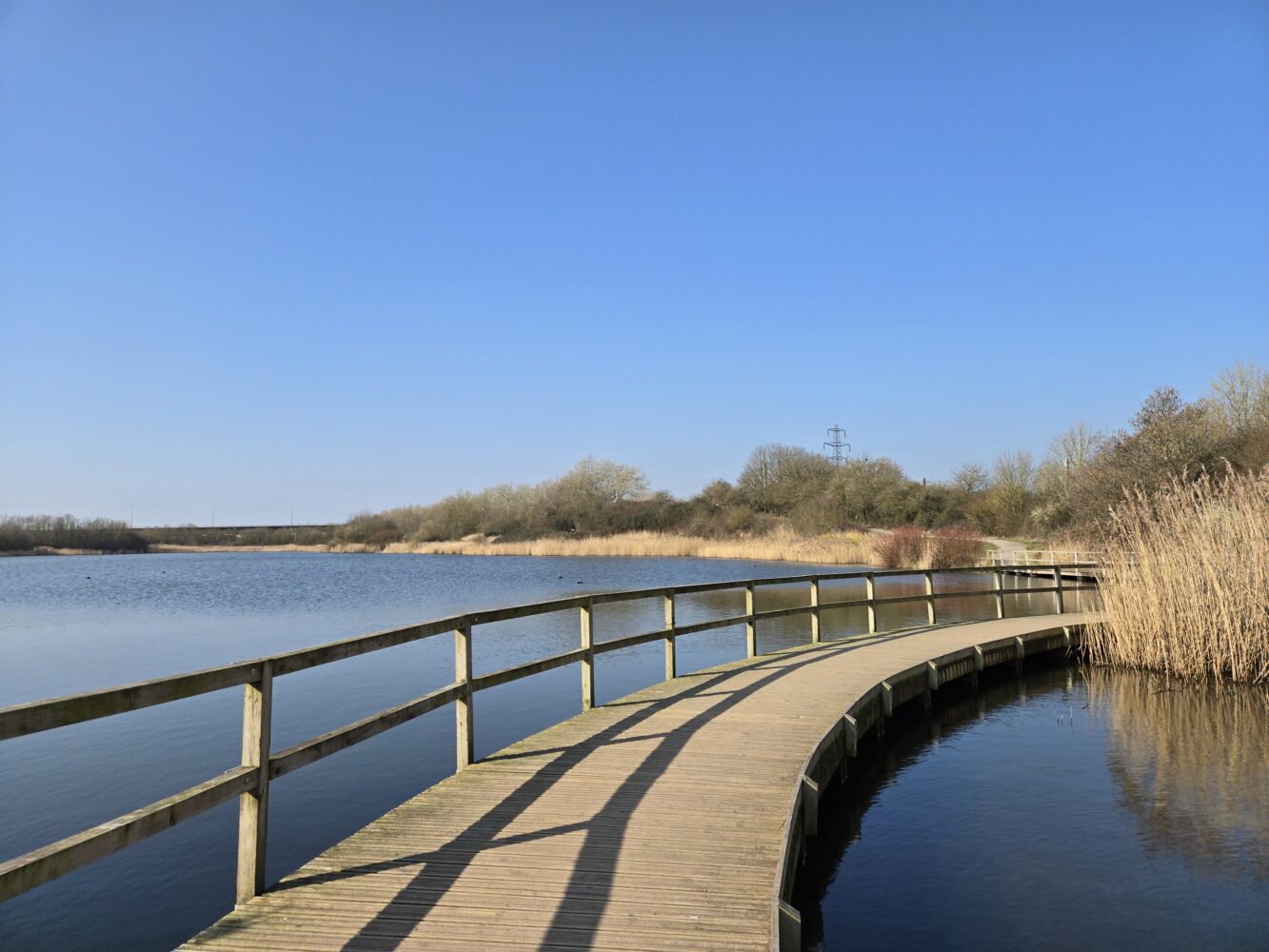
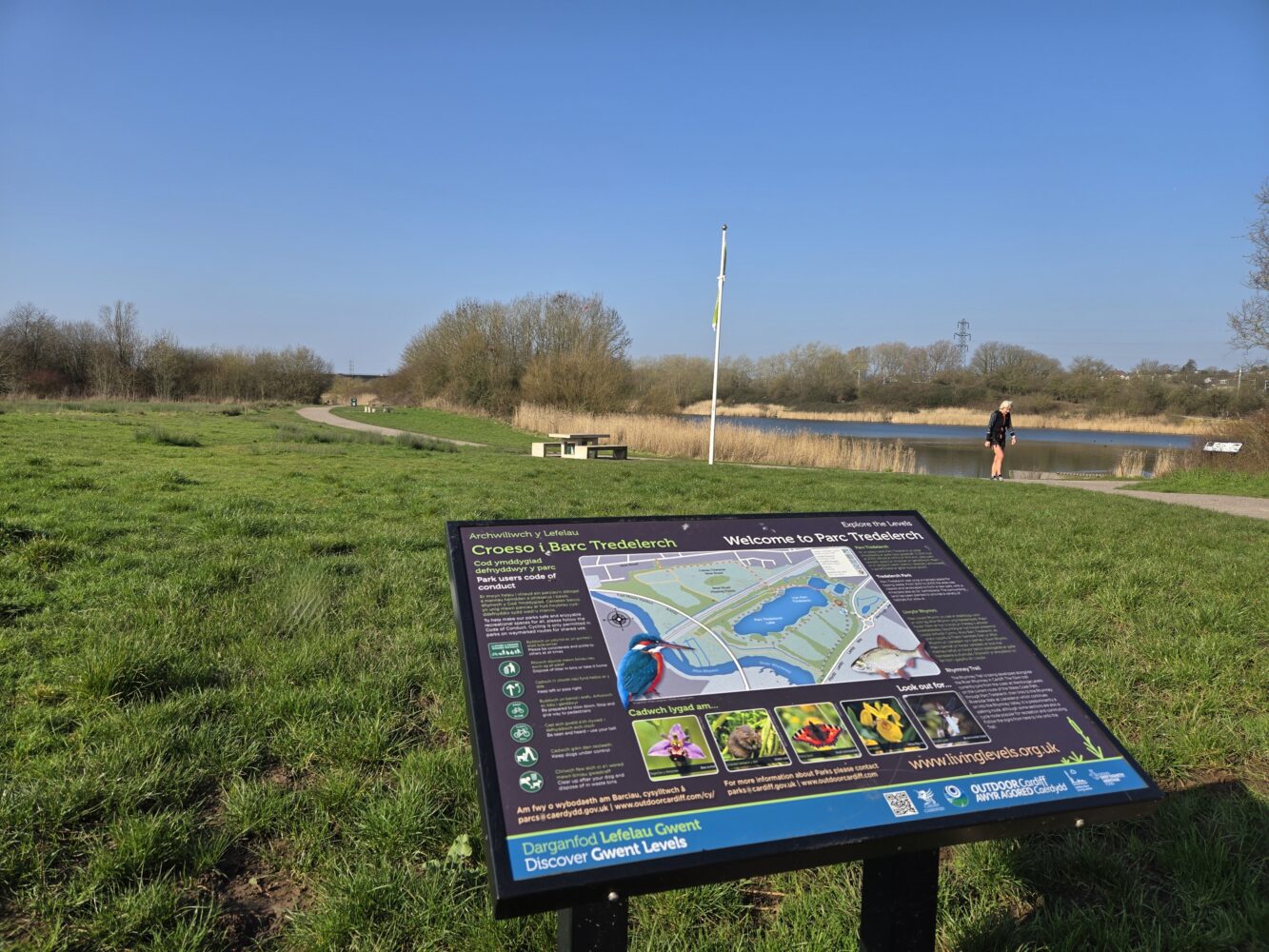
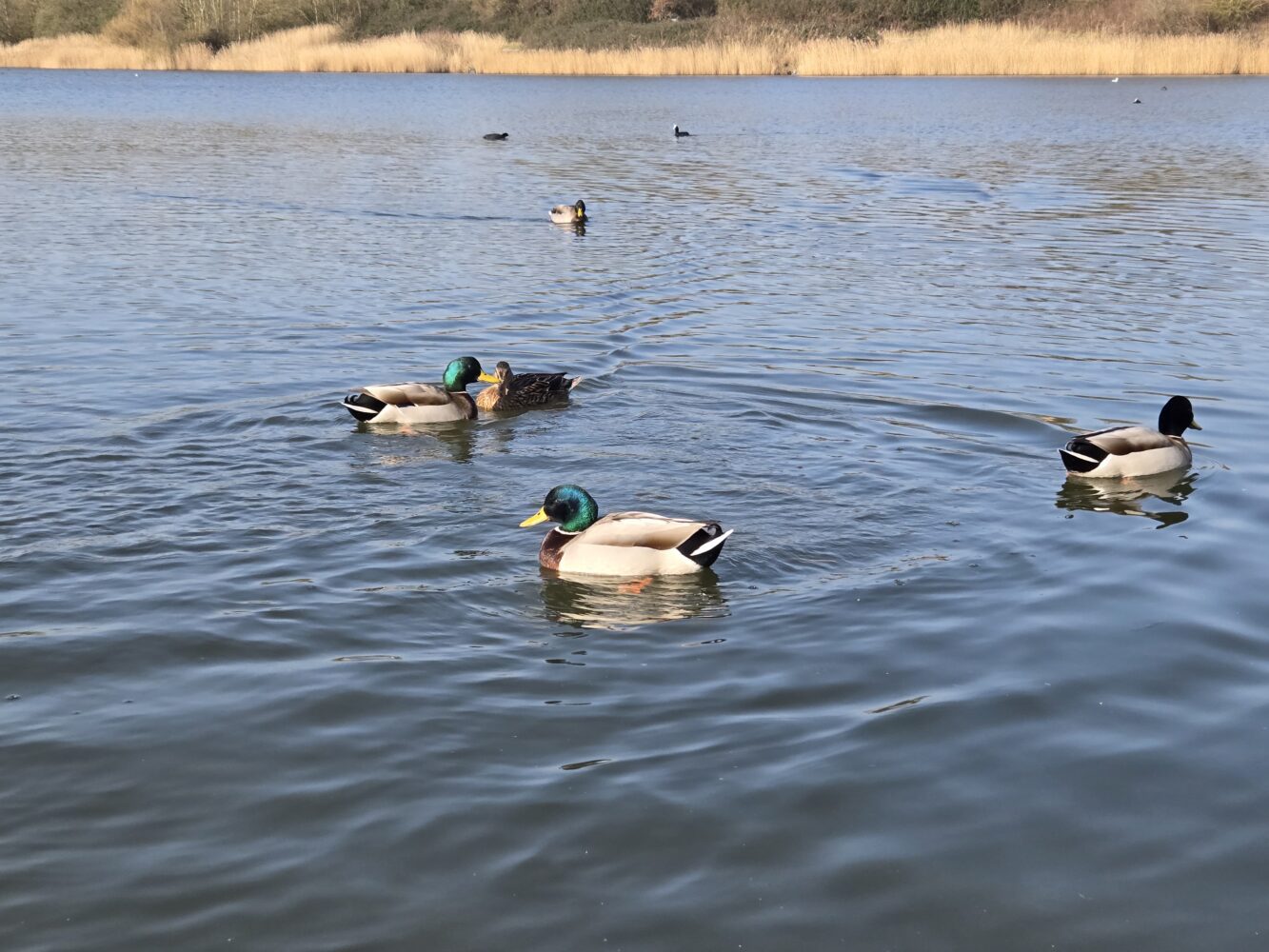
The large lake is circled by a stone dust path and you can also walk across it via the boardwalk. It is popular with bird watchers and anglers. Amongst the more common birds, you might see Kingfisher, Tufted Duck, Cormorant, Great Crested Grebe and more on the lake.
This area of the park was planted with trees over 20 years ago when the park was first created. Besides this there are a number of copses around the southern side of the lake. These copses were planted by family groups of varying generations from the local area, mainly Rumney, as a family legacy.
When the lake was first established, the area around the lake was topped with heavy clay soil. Because of this, it retains water and has become covered with self-sown reed grasses. These provide a habitat for Reed Warblers and Buntings amongst other birds and small mammals. There are also several populations of wild orchids in the wetland area.
This stretch of the river Rumney was diverted when the flyover was built. The surrounding floodplain is occasionally flooded. This is an excellent example of an estuarine habitat, a unique coastal system where freshwater from the river meets saltwater from the sea. This area of the park is managed by Natural Resources Wales.