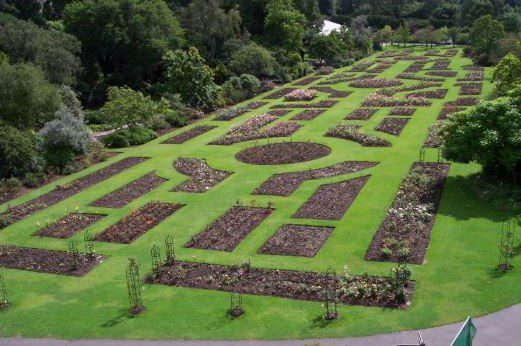
This Rose Garden looked very different in the early days of Roath Park, when it was known as the ‘Students’ Garden. Plants were grown in family groups; one bed might have contained grasses and another magnolias.
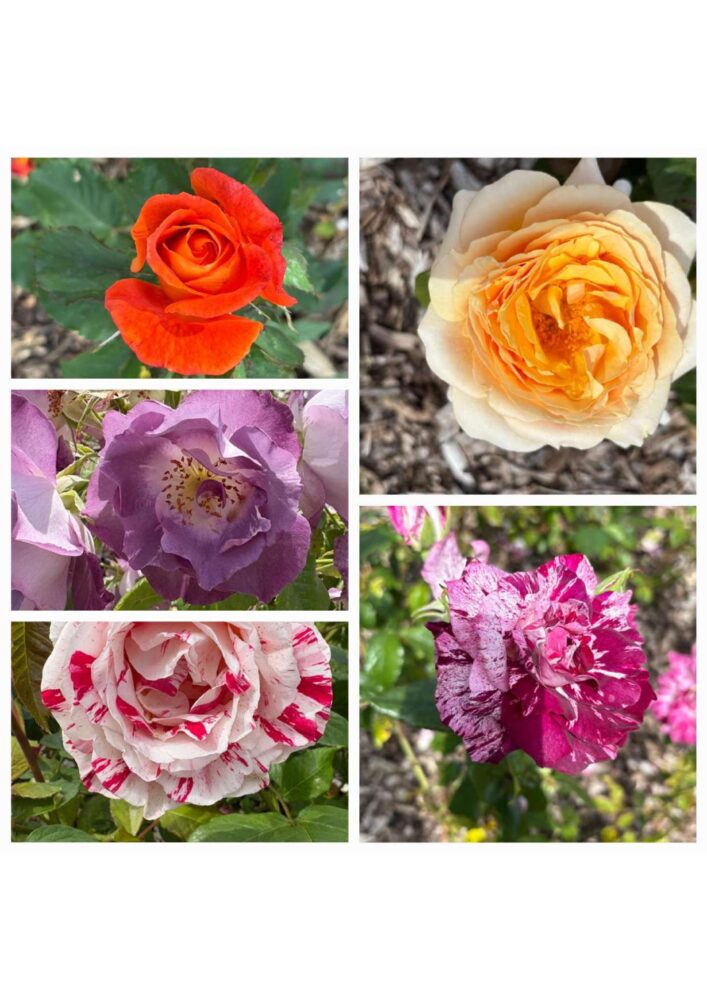
During World War II, the beds were used for food production. In the early 1950s it was planted as a rose garden for the first time.During the summer months it became a very popular attraction and in 1960 the National Rose Society chose to display award-winning roses there. That December, the Park’s Director William Nelmes joined the Council of the National Rose Society, which planned to hold rose trials at Roath Park in 1961.
Species roses were planted in the long borders along the sides of the rose garden, and cultivars in the central beds. There was a complex design of over 60 beds, with 6 outer beds at the north end devoted to the National Rose Society. Each year these 6 were planted with trial roses which would be displayed on rotation for 6 years each. By the late 1960s the rose garden was nationally renowned and people visited from all over the UK.
1960s Care of the rose garden
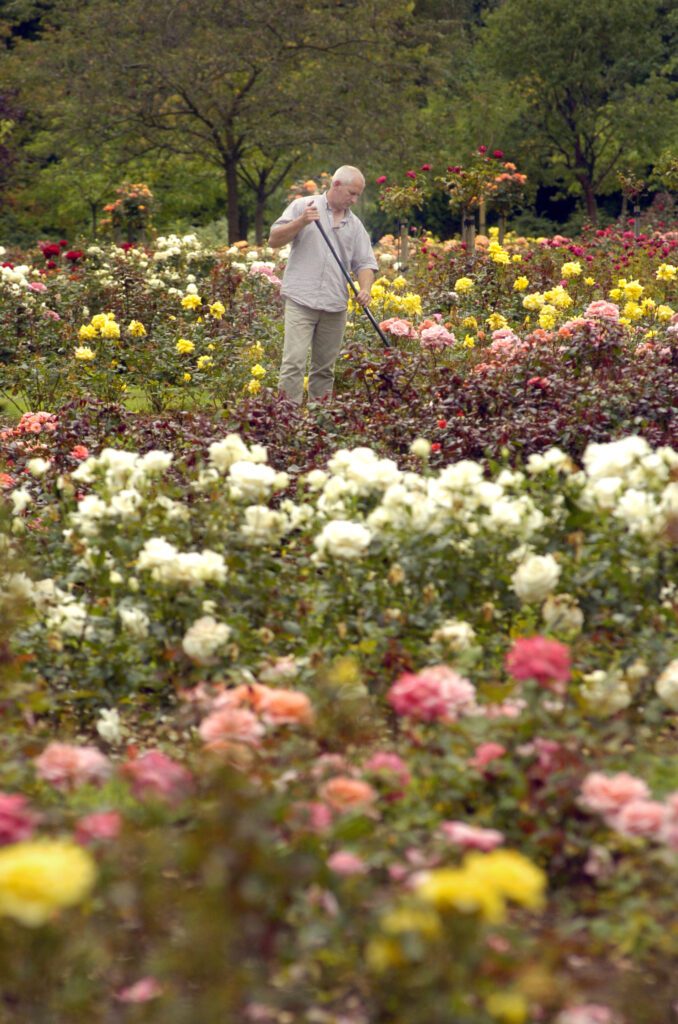
The garden had 16 staff, including a Head Gardener and 2 National Joint Council Certificated Gardeners. Dead-heading, hoeing and edging the rose beds was a full-time job for 2 gardeners. Only qualified gardeners were allowed to prune the roses.
In March, after pruning, fertiliser was added to the soil and staff from elsewhere in the park were enlisted to help fork all the beds.
Throughout the summers, a large self-propelled sprayer was deployed to spray pesticides to protect the roses from Aphid and Leafhopper. A seaweed manure fertiliser was added to each spray as a foliar feed.
Beds that performed badly would be stripped of plants and re-planted. The soil was removed to two spade depths. Well-rotted farmyard manure was added and then fresh topsoil would be brought in to backfill the bed. Later, to save labour and costs, the soil in the beds was chemically sterilised instead.