Roath Recreation Ground

Roath Recreation Ground (known affectionately as ‘Roath Rec’) covers around 23 acres and was formed by diverting Roath Brook to create a level, grassed area suitable for sports to be played. In some places, the ground had to be raised by nearly a metre. This was achieved by tipping the town’s refuse in the park to fill the course of the old Brook.

The Rec was opened to the public in 1894 when the rest of Roath Park was completed. On 20th June, 1894, a grand opening ceremony for Roath Park was held in the Rec. It is estimated that around 10,000 people gathered to celebrate, with a procession from the Town Hall, fireworks and later aquatic sports displays on the lake. The people of Cardiff decorated their homes and shop-fronts, and businesses were asked to close for the afternoon so the whole town could join the celebration.

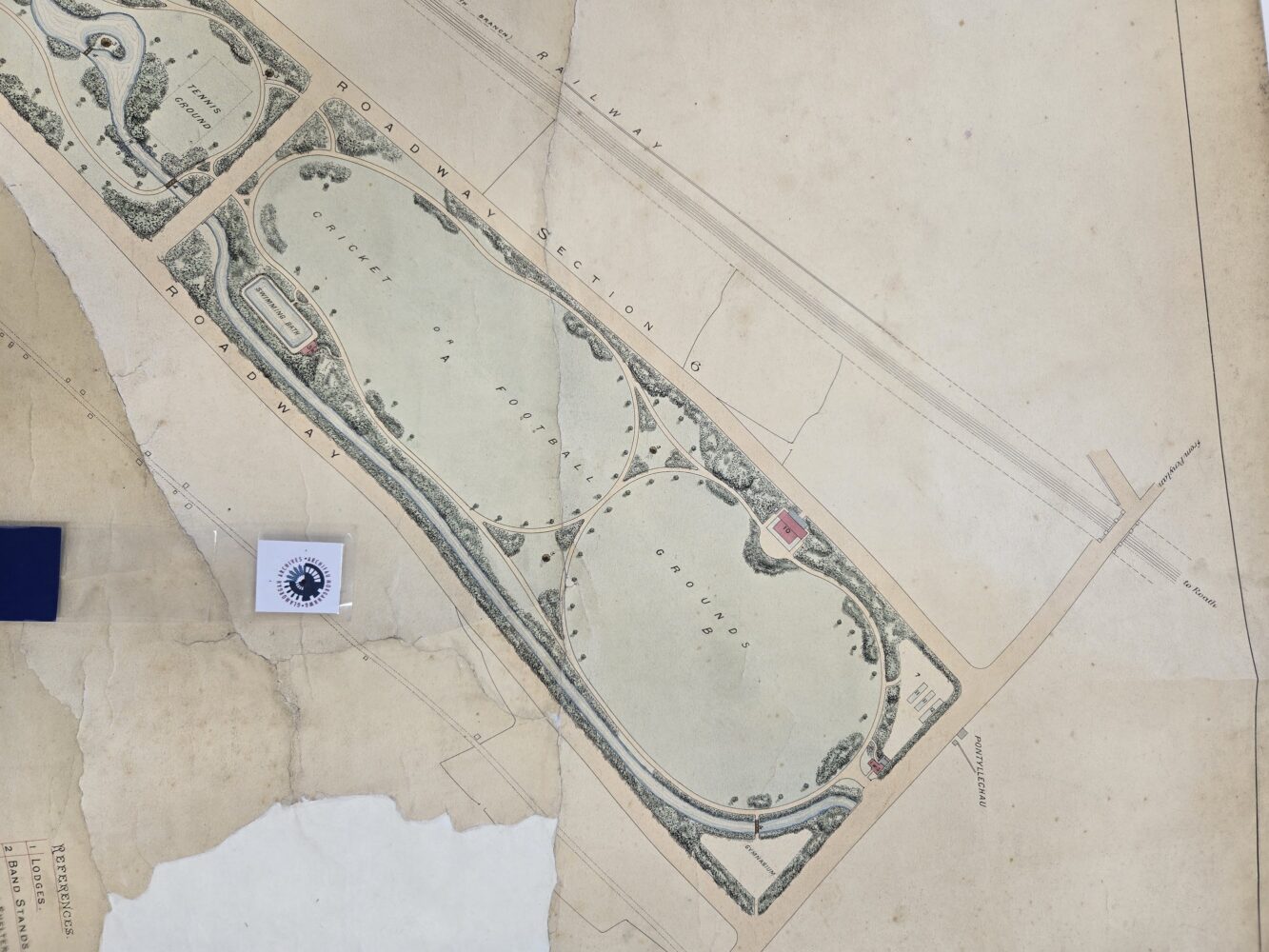
historic drawings of Roath Rec before the park was built
Competitive plans of proposed recreation grounds at Roath Park, c.1892 (Glamorgan Archive)

The early days

In its early days, the Rec was split so that girls and young children had a space separate from the men and boys. Due to the laws of the time, the Rec could not be closed at night. Park keepers would patrol after dark with lanterns. It wasn’t until July 1904 that the Council was given permission by Parliament to lock the Rec overnight.

When the Rec first opened, sports facilities included a gravel cycle track that was almost a mile long. While the Rec initially had several football pitches, it did not have changing rooms or goal posts. By 1905 work was underway to improve facilities and set out spaces for cricket, football and bowls. It was also agreed to create a movable shelter to act as a changing room.

In 1908 the Parks Superintendent hoped to find a way to flood part of the Rec during a severe frost, to create an area for safe ice skating. Members of the public had been disappointed that the lake rarely froze over thickly enough to skate on. While investigations were made, this plan never came to fruition.

Changes were made to the brook in 1913, when the sides were made less steep so that children could paddle in the water. An old set of concrete steps can still be seen going down into the water in this area of the brook.

WW1

During the First World War a large part of the Rec was used for allotments. This continued until 1920, when the Parks Committee ended the tenancies of allotment holders.

By 1930, Andrew Alexander Pettigrew, then Chief Officer of Parks and Open Spaces, reported that the surface of the Rec was still not adequate for playing sports despite efforts to level it. The sports field was eventually restored and pitches for rugby and football were provided during winter, while in summertime baseball became a hugely popular game.

Baseball in Roath Rec

Welsh baseball is thought to have started when the dock workers at Cardiff Docks played baseball in their free time. Many dockers came from Ireland, where rounders was a popular game. It is thought that Welsh Baseball developed from a variety of influences; American, Irish, Welsh and English.

The first formal games were played in the 1890s and it became hugely popular in Cardiff, Newport and Liverpool. The first ‘international’ game between Wales and England took place in 1908 and this became an annual tradition that continued up to 2015. Roath Rec hosted many international games and was also the home of Penylan baseball club.

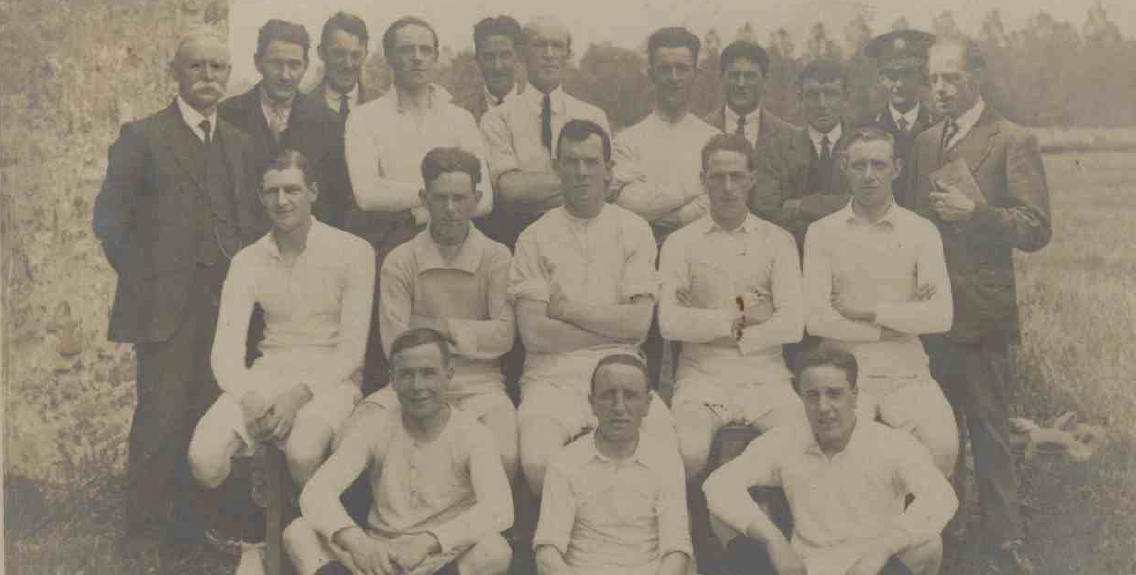
Post office baseball team from 1920s historic photo in sepia tones
Cardiff General Post Office baseball team in the 1920s (County Library and Media Collection)

By 1921, there were 60 clubs and 1400 registered players in the Welsh Baseball Union, all based in Cardiff and Newport. At this time, games drew huge crowds, with internationals seeing as many as 10,000 spectators in attendance.

Welsh baseball was perceived proudly as a working class sport. Clubs did not officially have home grounds, but relied on the use of public parks. Spectators were not expected to buy tickets, but collections were made at games to cover the fees for the pitches. The game played a significant role in communities such as Splott and Grangetown, with much of the local social scene based around the sport.

Just like football, Welsh baseball attracted significant numbers of female players during the First World War. While those in charge of football leagues discouraged women from continuing to play after the war, there was no such opposition in baseball. In the 1920s, the women’s game was thriving and the first women’s international took place between Wales and England in 1926.

For a number of reasons, the popularity of the game dwindled gradually after the Second World War. The more formal sports leagues did not support baseball and it became increasingly difficult to find space to play. Funding had been precarious for many years and teams struggled to find the money to continue.

While Welsh baseball is still played by a small number of teams, the American game is much more popular today.

WW2

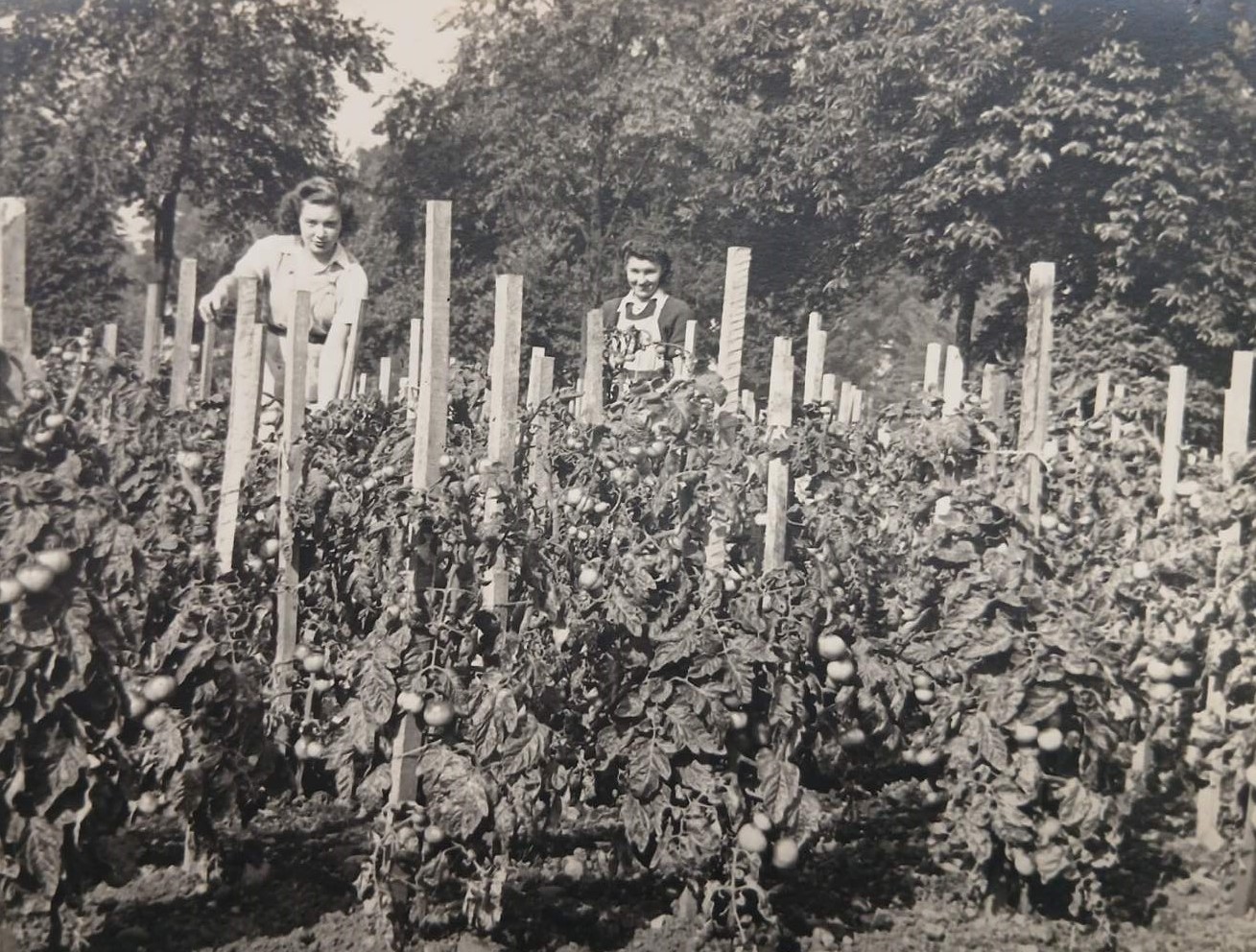
During the 1939-45 war, the Rec was used as a depot for barrage balloons. Allotments once again took up about half of the Rec. The railings were removed to contribute to the drive for scrap metal to be used in the building of ships, aircraft and weapons. There were buildings added for Air Raid Precautions (ARP) purposes, including a warden’s post, decontamination, cleansing and rescue centres.

After WW2

By 1945, the rescue centre was being used as a dressing room by the Parks Department. Another of the buildings became the Roath Park Recreation Centre, used by local societies and theatre groups. In 1956 this building became the Roath Park Library. It was approved to become a permanent library in 1970 and it was later renamed Penylan Library.

Replacement of the Recreation Centre with new facilities for the community was approved in 1985. The new development would provide space for indoor sports, as well as public toilets, outdoor changing rooms and a new children’s play area. Today the Penylan Library and Community Centre is a hub for local residents with a wide range of activities and facilities on offer.


historic photo showing two women amongst tomato plants growing in the park
Wartime vegetable production (Glamorgan Archive)

REFERENCES

International Journal of the History of Sport, vol. 17, no. 4 (December 2000). ‘Poor Man’s Cricket’: Baseball, Class and Community in South Wales, c. 1880-1950, Martin Johnes

Anne and Andy Bell, www.cardiffparks.org.uk

Header image by John Bristow, used under Creative Commons Licence


Friends of Roath Park Logo
Working in partnership with Friends of Roath Park

Website designed by Cardiff Council Web Team

Cookie policyPrivacy policyAccessibility statement