The Fair Oak was an iconic ancient tree that stood in the north-east corner of the Pleasure Garden and gave its name to Fairoak Road.
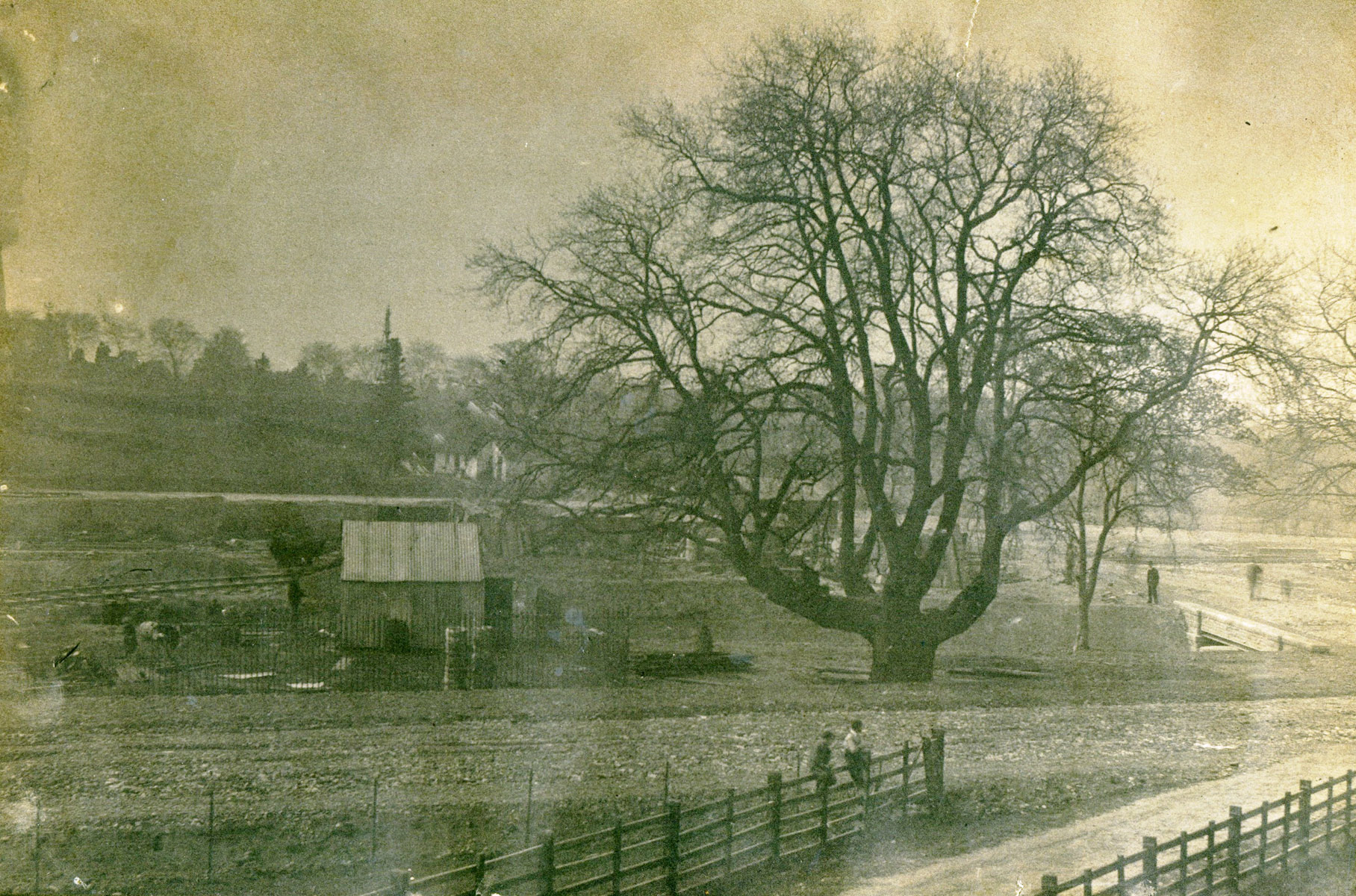
In 1905, the Parks Superintendent William Pettigrew estimated that the tree was 500-600 years old, pre-dating the park by hundreds of years. Sadly, the tree died late in 1925 and was cut down. The lower section of the trunk and a few branches were left as a relic. These were eventually removed in 1935 to make the road junction safer for traffic.
The stump of the tree was still visible decades later, but by the 1980s it had mostly rotted away. A plaque was then put in place to mark the spot where the tree once stood.
The Fair Oak was said to have been a Quercus robur (English Oak). A new tree of the same species was planted close to the location of the ancient tree and is still in situ today.
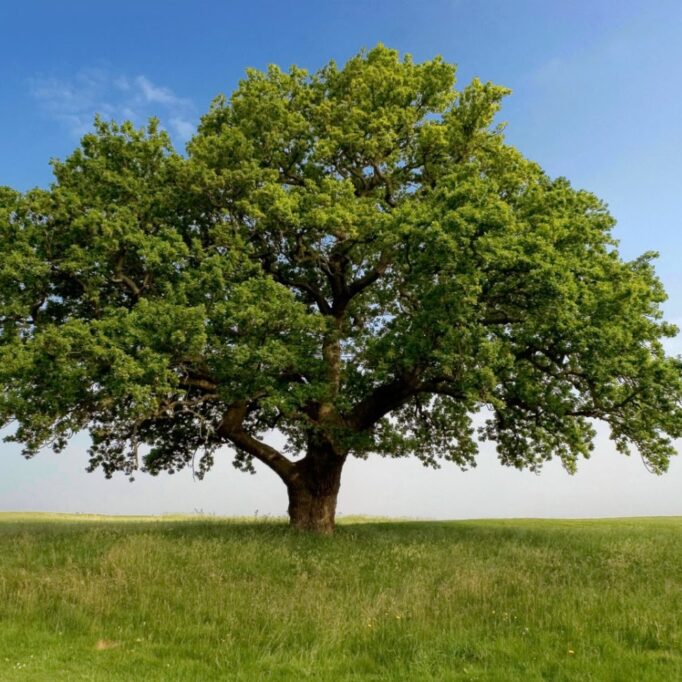
Oak Trees in the Park
There are 12 oaks planted in the Pleasure Gardens. Some of these oaks have their origin in Mexico, Japan and Hungary.
The English Oak (Quercus robur) and the Sessile Oak (Quercus petrea) are the two most common oaks in the UK. What are the differences?
The English oak or Pedunculate Oak has acorns with stalks called peduncles. The leaves have a very short stalk hidden by two leaves at the base.
The Sessile Oak (Durmast/Welsh/Irish Oak) has acorns with no stalks (sessile) which sit on the shoot. The leaves have a long stalk.