From the earliest days of the park’s existence, bands played to entertain the crowds. To begin with, they performed on the Promenade. Spectators often hired boats so they could enjoy a good view of the performances. The season for band performances ran from May to August.
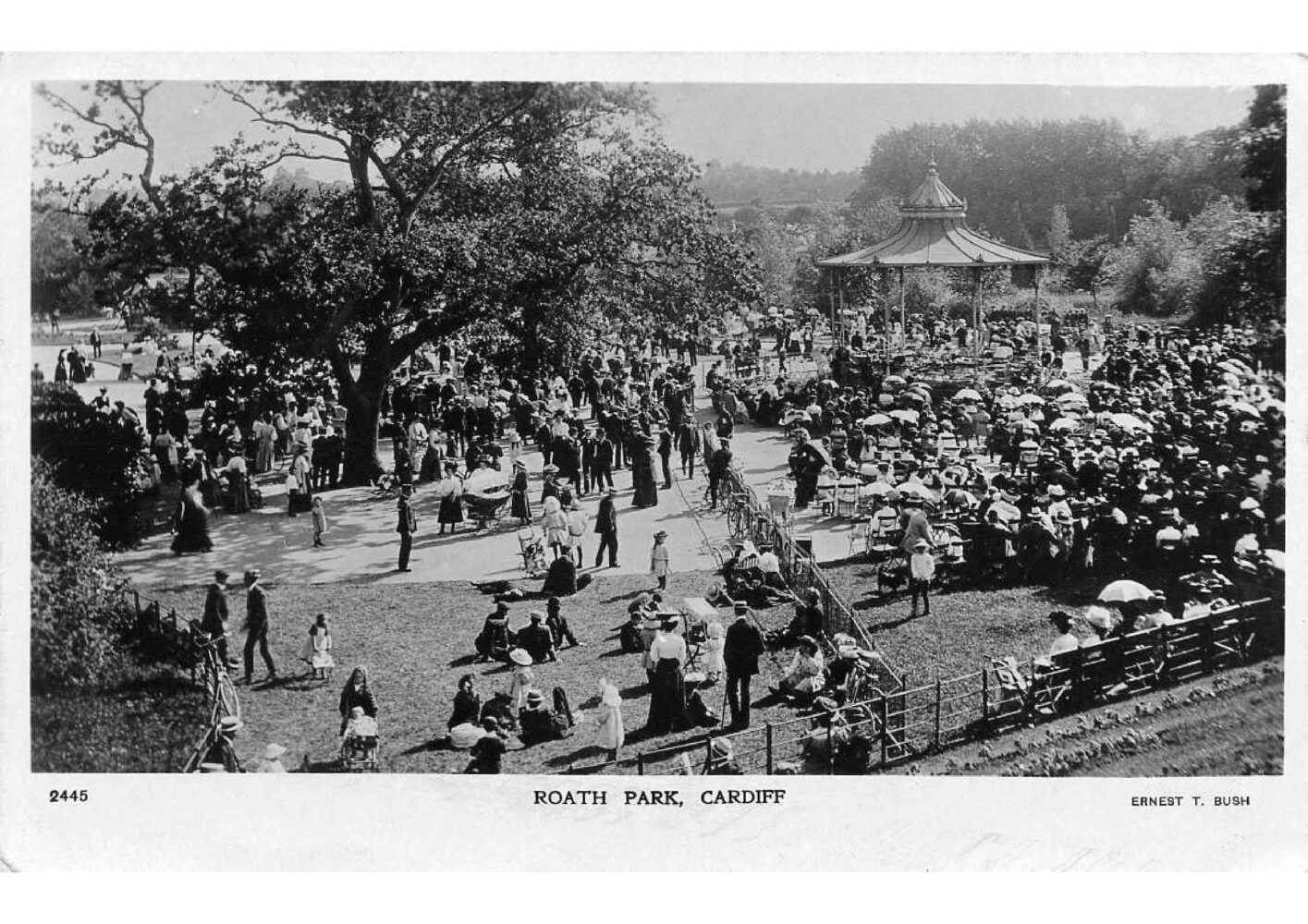
Throughout the 1900s the Council paid bands to play in all of the Cardiff parks. Roath Park got additional funding from the Tramways Committee, who wanted to make sure that their new tram service to the park was well used.
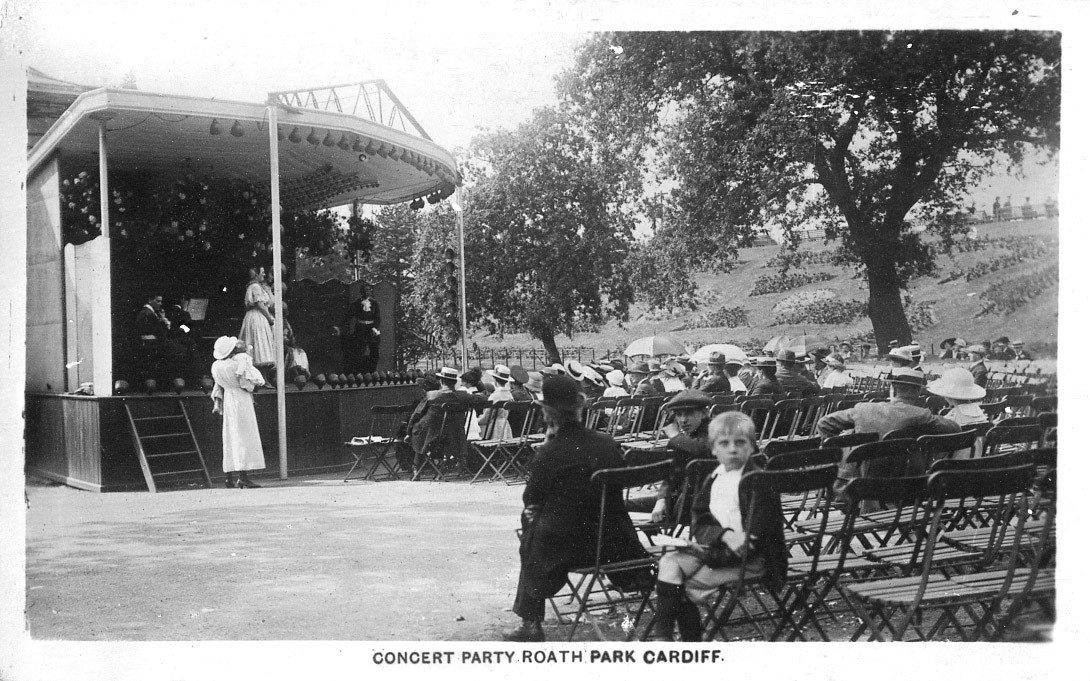
A temporary bandstand, built in 1899 was later replaced with a permanent structure in 1903. Folding chairs were made available for visitors to hire for a small charge. On one Wednesday in the summer of 1904, it was estimated that as many as 14,000 people attended while a band was playing. The ever growing popularity of these events led to the widening of paths and laying of additional grassed areas to accommodate the crowds.
In 1911, electric lighting was installed on the bandstand, the promenade and the paths approaching the bandstand. This meant the season for musical performances could be extended for an additional 6 weeks, and the lit areas of the park could stay open for 2 hours longer each day. That winter, paths were again widened to ease overcrowding on band nights.
The roster of performances continued to grow, to include choir performances and costume concert parties known as Pierrot shows. These shows required a temporary stage with canvas sides, with the bandstand being re-purposed as a dressing room. After their first season in 1912, these shows were deemed a great success. They went from strength to strength and by 1915 concert parties were booked for entire weeks of performances. For many years to follow, these parties became the main entertainment at Roath Park.
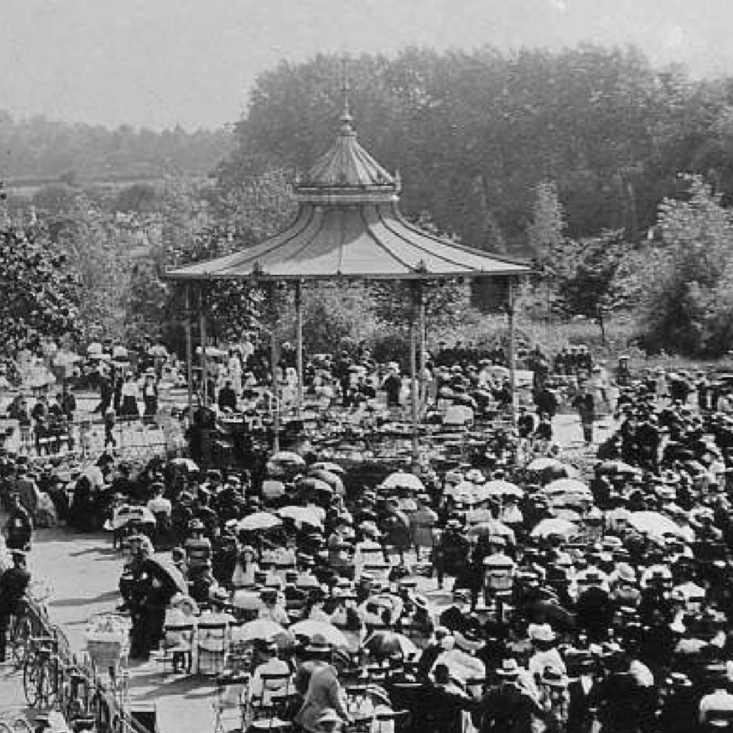
Audiences had spent many years viewing performances in the open air and many requests were made to provide shelter from the weather. The Roath Park Concert Pavilion was built in 1921, enabling audiences to enjoy shows under cover.
In 1930, an area was provided close to the bandstand for dancing during concerts. This was sited approximately where the children’s playground stands today. Seating and refreshments were also made available.
Music for dances was later provided using gramophone records, with loudspeakers being installed in the pavilion in1940. These dances were hugely popular. The bandstand was hardly ever used after this, so it was removed in 1943.The Pavilion was demolished in 1953 when it was deemed unsafe.